A roll-off for construction and demolition debris is sized to the job, not the room. Step 1: pick the bin by debris volume, a 10-yard container holds roughly 4 pickup loads and suits a single-bathroom gut or a small…
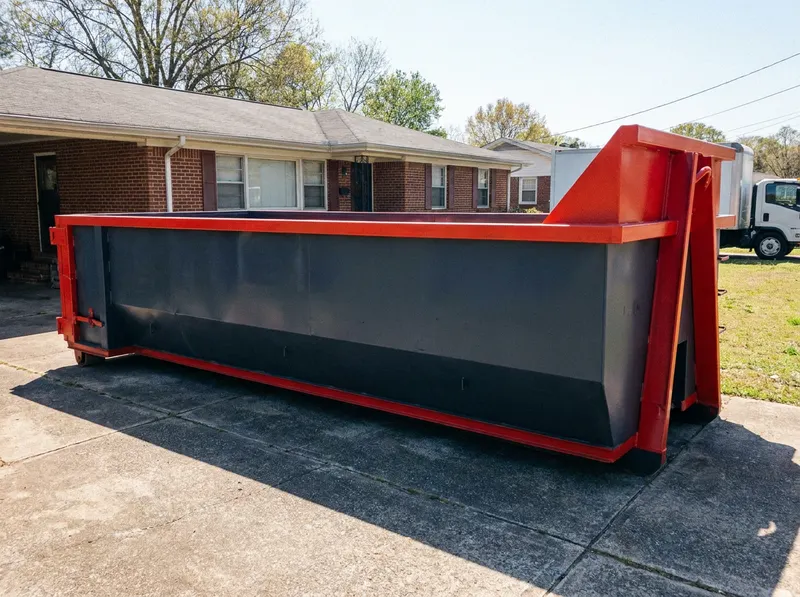
A roll-off for construction and demolition debris is sized to the job, not the room. Step 1: pick the bin by debris volume, a 10-yard container holds roughly 4 pickup loads and suits a single-bathroom gut or a small deck tear-off; a 15-yard ($650) handles a kitchen remodel's cabinets and drywall; a 20-yard ($695) covers a full-floor flooring-and-tile strip; a 30-yard ($795) takes a two-story framing or siding job; and a 40-yard ($895) is sized for whole-house demolition or a commercial fit-out on larger Southside and Roebuck sites. Step 2: confirm the flat price on the phone. Step 3: the bin is delivered and placed. Step 4: the crew loads it over the rental window. Step 5: pickup and disposal are handled at the quoted price. The crucial non-obvious point: the number on the quote is the number paid, the landfill dump fee is already baked in, unlike the common model where a low headline rate hides a per-ton charge that doubles the total.
Heavy C&D debris changes the math. Clean concrete, brick, asphalt and dirt are dense, so a 10-yard or 15-yard container is the right call for a driveway demo or a chimney teardown in Crestwood or Highland Park, a 40-yard filled with concrete can exceed a road-legal axle weight and cannot be hauled. Mixed light debris like drywall, lumber and insulation from a Forest Park renovation fills volume long before it hits a weight limit, so the larger 30-yard and 40-yard bins fit those jobs. If a project mixes both, splitting clean concrete into a small dedicated bin keeps the load legal and lets the material route to a recycling facility rather than the general landfill; the EPA tracks that construction and demolition debris makes up more than twice the tonnage of municipal trash nationally, and clean fill and metal are widely diverted from it. Alabama disposal follows the state's solid-waste rules under the Alabama Department of Environmental Management.
Placement and site rules matter in older Birmingham neighborhoods. On the tight lots and narrow streets of Avondale, Five Points South and Norwood, a 10-yard or 15-yard bin usually fits a standard driveway, while a 30-yard or 40-yard needs about 60 feet of straight clearance for the truck to tilt and set it down. A bin placed in a driveway or on private property needs no city permit; a bin set in the public right-of-way or a parking lane on streets through Woodlawn or East Lake typically needs a right-of-way permit from the City of Birmingham, and plywood under the rails protects the pavement. Job-site debris loading also falls under OSHA construction housekeeping standards, which require debris cleared from walking and working surfaces.
A C&D dumpster rental is not junk removal, the container is dropped and the crew on site loads it, which keeps the flat price low because no labor is bundled in. For a working contractor that is the point: the bin stays on site through the build, gets loaded as the trades finish, and leaves full. Ordering is straightforward: call (205) 551-5369 or text a photo of the pile and the driveway, confirm the flat rate, and set a drop date. Ironside Dumpster Rental serves Birmingham and the surrounding Jefferson County area with the five flat sizes above and no hidden fees.
Every job gets a firm, written price after an on-site visit.
Tell us about your construction & c&d dumpster rental job in Birmingham and we'll send a clear, written quote, usually the same day.
 Ironside Dumpster Rental